Courtesy the artist.
Auto Italia presents Noorani Metal Sound, the first major UK solo exhibition by Pakistani interdisciplinary artist and researcher Zahra Malkani. Featuring new sound work, sculpture, installation, and moving image, the exhibition draws on mysticism, ecological resistance movements and feminist aural practices to explore the intersections of the sonic and the sacred across Pakistan’s heavily exploited coastal and delta regions. Emerging from over five years of ongoing research, Noorani Metal Sound brings together Malkani’s field recordings and archival work tracing oral and sonic traditions of lament, devotion and resistance.
Set against the ravaged aquatic landscape of Pakistan, Noorani Metal Sound unfolds through interwoven motifs of water and metal, rust, circling themes of revolt and remembrance. The recurring use of metal and rust gestures toward the materialities of infrastructural ruin and violence in the region, amidst which this body of work emerged. In both sound and form, metal also resonates with the rhythms and sonic intensities of ritual lament, as well as the hard-edged devotional spirit of South Asian shrines as sites of death, refuge and sacrifice.
New sound works weave together lullabies, war cries, stories of martyrdom and protest songs with devotional laments that reverberate across temporal and geographic thresholds – from the Battle of Karbala at the Euphrates River some 1,400 years ago, to the ongoing Baloch insurgency along Pakistan’s Makran Coast. The exhibition opens with Noorani Echo Sound, a three-part cassette box set documenting the artist’s expansive audio archive, collected between 2020 and 2025, alongside a publication of fieldnotes, conversations and translations.
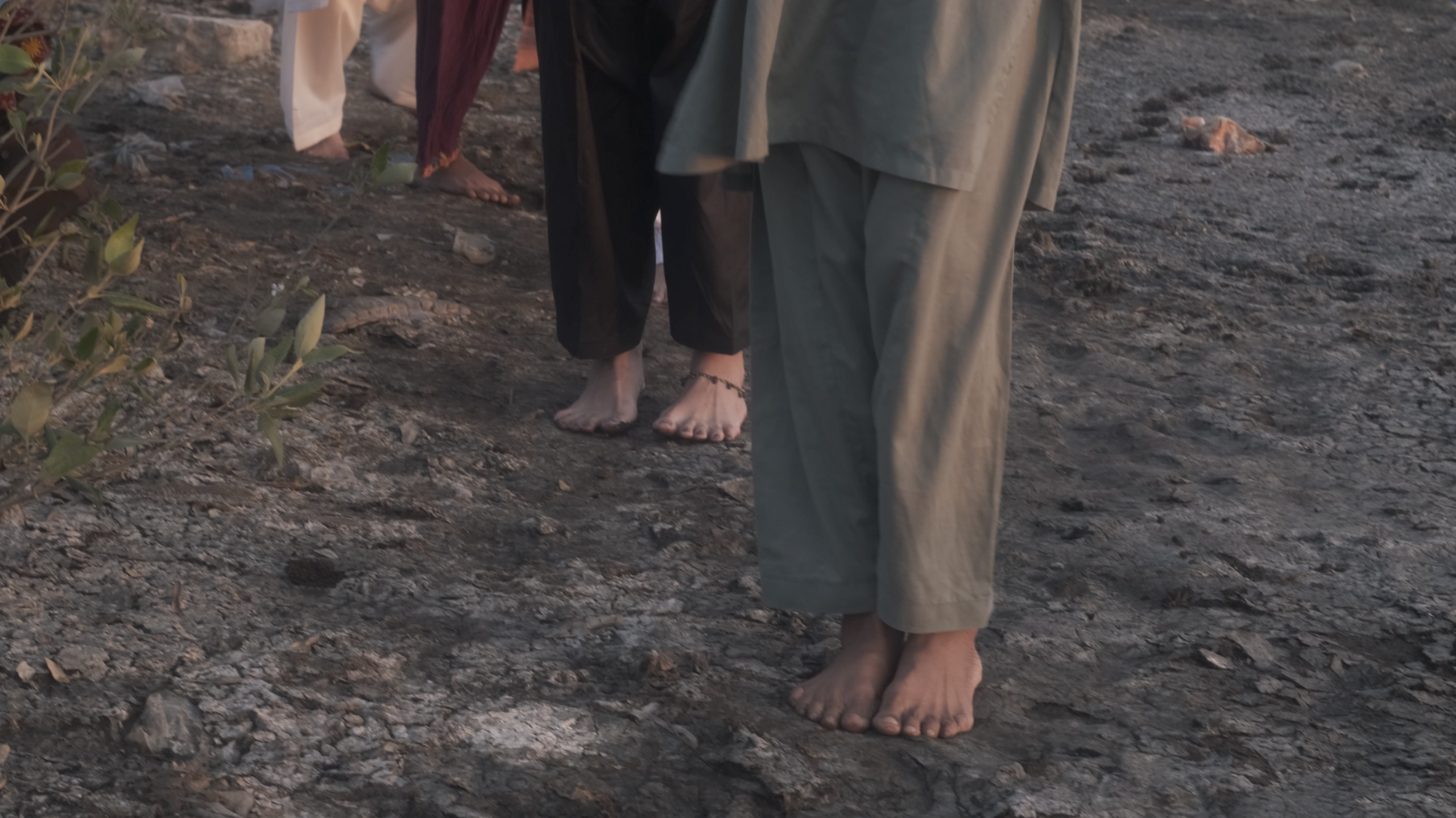
In the back gallery, an audio-visual installation brings together sound, sculpture, and newly commissioned moving image work. The film presents footage of ceremonial footwork, a reference to Sur Purab, a Sindhi folk song about a woman who, entranced, is inexplicably drawn to walk along a mysterious path. An accompanying two-channel soundscape draws sounds of ritual ceremonial mourning into relation: songs, cries and laments that echo unspeakable massacres and brutalities. Woven together with recordings from Karachi’s oldest aquatic neighborhoods, the work is structured around sounds of joyous praise for the martyred and the missing.
Sitting in deliberate opposition to the secular conventions of the gallery, the exhibition takes the form of a sacralised environment or shrine. In doing so, it destabilises the colonial and touristic imagination through which such sites in Pakistan have often been rendered as quaint, colourful or merely festive. Here, the shrine emerges instead as a charged political and emotionally weighty space: a site of collective mourning and refuge, of death and entrancement, agitation and lament.
The exhibition will be accompanied by an expanded public programme of events, Metal on Metal, curated by researcher, producer and Malkani’s long time collaborator, Dr Syma Tariq.
Noorani Metal Sounds is curated by Mariam Elnozahy and Katie Della-Valle. The exhibition was realised with the generous support of Arts Council England, Cockayne Grants for the Arts, the Embassy of the Netherlands, ZVM Rangoonwala Foundation, La Becque and Stroom Den Haag.
Zahra Malkani is a multidisciplinary artist from Karachi, Pakistan. Collaboration, research, and pedagogy are at the heart of her practice. Working across multiple media she explores the politics of development and dispossession through the lens of dissident ecological knowledges and traditions of environmental resistance. She is a co-founder with Shahana Rajani of Karachi LaJamia: experimental and ecstatic ecopedagogies in collaboration with ongoing movements in defense of land and water in the city.
Zahra’s work has been supported by institutions such as the Sharjah Art Foundation, the Graham Foundation for Advanced Studies in the Fine Arts and the Rockbund Arts Museum. She has been awarded residencies at Academie Schloss Solitude, the Jan Van Eyck Academie, La Becque and the Rijksmuseum. Her work has circulated internationally, more recently in spaces such as KonsthallC (Stockholm), Nottingham Contemporary (UK), the V&A Museum (UK) and Colomboscope (Sri Lanka). She has published writings in journals like Perspecta: The Yale Architectural Journal, the Journal of Architectural Education and online publications such as Against Catastrophe and Decolonial Hacker. Zahra was nominated for the Jameel Art Prize from the V&A Museum and Jameel Arts Foundation (2023), and is a recipient of the Asia Arts Gamechanger Award (2024).