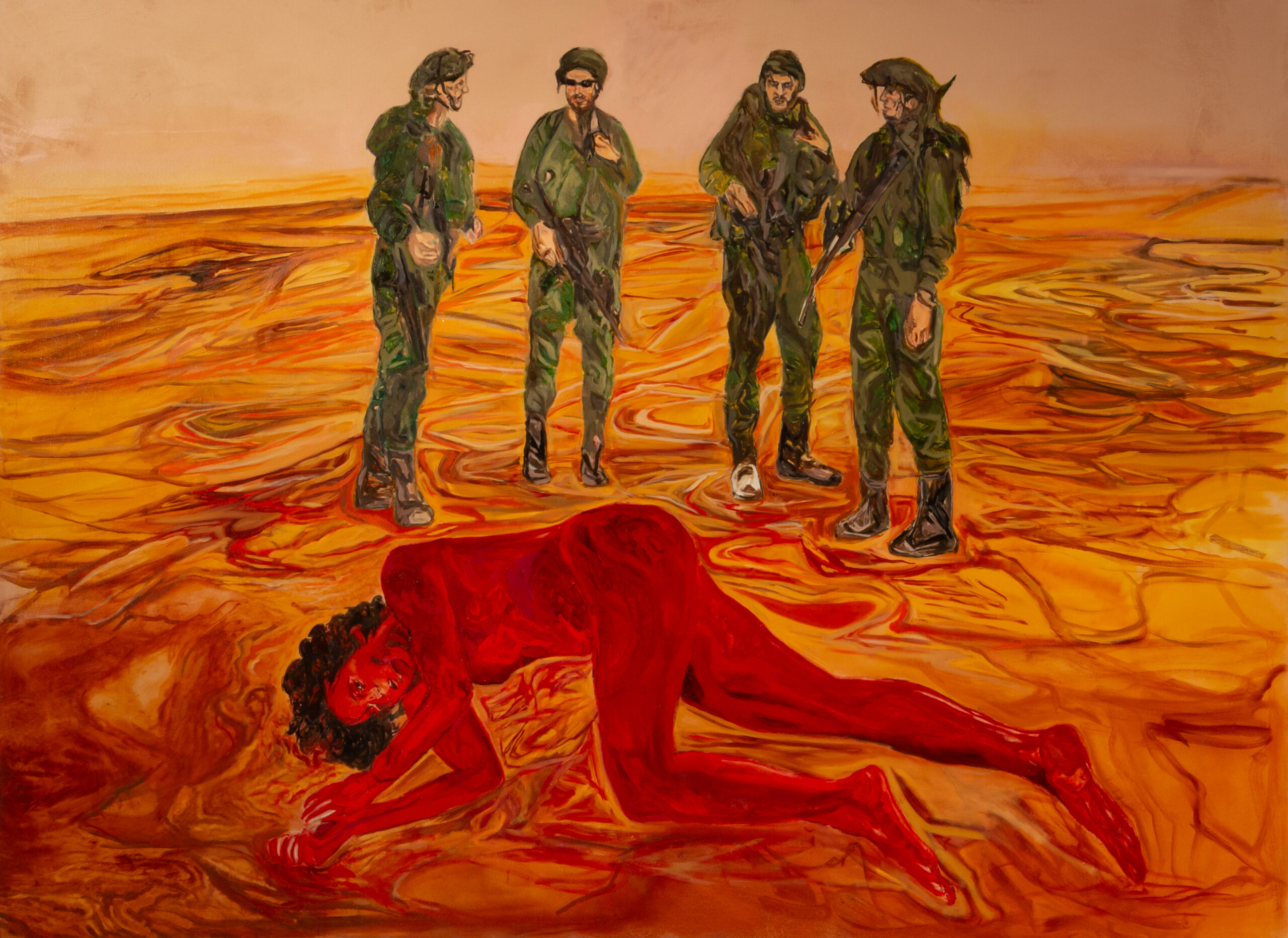
Join us on Wednesday 20th May, from 6pm for how to cannibalise the dead, a free participatory performance with Palestinian artist Izdihar Afyouni.
Exploring consent, narrative and authorship in the context of re-representation, institutional violence and the circulation of stories across cultural borders, the performance asks how first-hand oral testimonies operate within institutional frameworks such as art galleries, cultural organisations, funding bodies, and discursive programmes. It considers how personal and political narratives are consumed, reshaped or used to produce value, and examines the ethics of re-representation, the performance of consent, and the role of the artist as both witness and mediator.
Participants will work together with testimony material and think through the ways in which stories are translated, appropriated or transformed within cultural and institutional contexts.
Ahead of the performance, participants are invited to submit or prepare a short first-hand oral testimony. This can be personal, published, fictionalised or anonymised. This is optional, and you can attend without submitting anything. You will not be asked to share personal testimony during the performance.
No prior experience of performance, writing or public speaking is needed. The performance is open to all, with a focus on artists, curators and cultural workers working across socially and politically engaged practices.
Please arrive from 6pm for a 6:30pm start.
This free event will take place at Auto Italia and is open to artists, curators, and cultural workers working across socially and politically engaged practices. To book, follow the link here or email info@artworkassociation.org
Izdihar Afyouni is a queer Palestinian multidisciplinary artist and writer working across large format painting, participatory performance, film and text. Their practice draws on Palestinian literature, oral testimonies, BDSM practices and colonial archives to interrogate carceral and genocidal colonial logic and political (ab)uses of the body, often using site-specific and participatory structures that collapse the space between spectator and subject. She is co-editing and writing for the upcoming publication Needles in the Eye: Refusal and the Necropolitics of Cultural Production with Gelare Khoshgozaran.